Answer these questions to help start a conversation with your healthcare provider today. Check your gut 
Answer these questions to help start a conversation with your healthcare provider today. Check your gut




Constipated by opioid
pain medicine?
Opioid treatment can help relieve moderate to severe pain. Unfortunately, opioid use often comes with the undesired effect of constipation. If you're taking opioid pain medication and experiencing difficulty with bowel movements, speak with your doctor, you may have OIC.
Like other OIC sufferers, you may have already tried over-the-counter laxatives, diet changes, and exercise.
The truth is, OIC is a unique type of constipation that may require a specific kind of treatment.
Relistor is specifically designed to target the constipating effect opioids have in the gut.
Take actionMay increase the number of spontaneous bowel movements.*,†,‡,∫
May cause a bowel movement within 4 hours *,†,‡
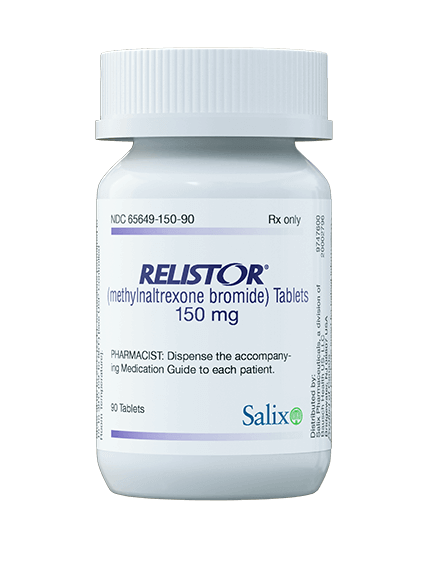
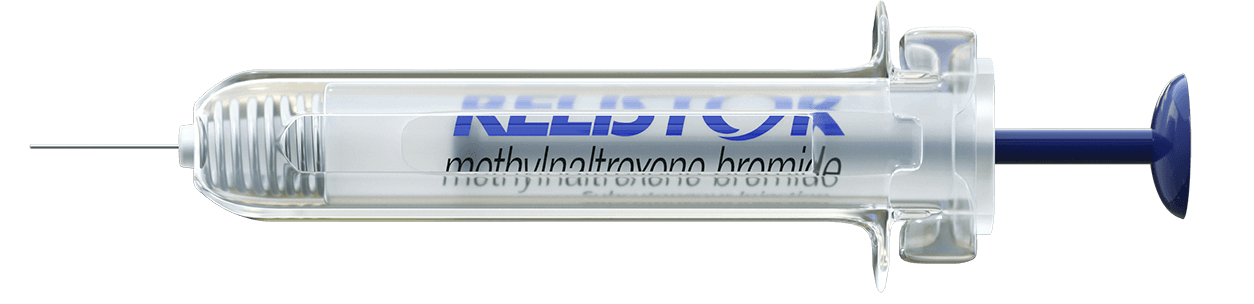
Available in two formulations for the treatment of OIC in long-lasting (chronic) non-cancer pain patients
*Individual results may vary
†Based on a clinical study of 401 adult patients with opioid-induced constipation (OIC) and long-lasting (chronic) non-cancer pain treated with Relistor tablets or placebo (sugar pill).
‡Based on a clinical study of 312 adult patients with OIC and long-lasting (chronic) non-cancer pain treated with Relistor injection or placebo injection.
∫In clinical studies, a spontaneous bowel movement was defined as a bowel movement without the use of a laxative in the previous 24 hours.
Talk to your healthcare provider about which option is best for you.
For adult patients with long-lasting (chronic) non-cancer pain.
For adult patients with long-lasting (chronic) non-cancer pain.
For adult patients with long-lasting (chronic) non-cancer pain.
For adult patients with advanced illness or pain cause by active cancer and who need increases in their opioid dose for comfort care.
For adult patients with long-lasting (chronic) non-cancer pain.
For adult patients with advanced illness or pain cause by active cancer and who need increases in their opioid dose for comfort care.
RELISTOR works differently from over-the-counter (OTC) laxatives. It’s an FDA-approved prescription medication for opioid-induced constipation specifically designed to target the constipating effect opioids have in the gut, without impacting opioid pain relief in the central nervous system. Tell your doctor if you experience any changes in your pain relief.
See howOpioids relieve pain by attaching to mu-opioid receptors in the central nervous system.
Opioids may attach to receptors in your gut, which can cause constipation
Relistor is designed to target the constipating effect opioids can have on the gut.
This can help:

Eligible patients may pay as little as $0 with a co-pay card


Talk about your symptoms with your healthcare provider to find out how Relistor can help manage your OIC.
Check in with your gut.
Check RELISTOR
RELISTOR® is a prescription medicine used to treat constipation in adults that is caused by prescription pain medicines called opioids.
It is not known if RELISTOR is safe and effective in children.
You are encouraged to report side effects of prescription drugs to FDA. Visit www.fda.gov/medwatch or call 1-800-FDA-1088.
For product information, adverse event reports, and product complaint reports, please contact:
Salix Product Information Call Center
Phone: 1-800-321-4576
Fax: 1-510-595-8183
Please click here for full Prescribing Information for RELISTOR tablets and RELISTOR injection, including medication guide.

Indications - RELISTOR® is a prescription medicine used to treat constipation in adults that is caused by prescription pain medicines called opioids.
It is not known if RELISTOR is safe and effective in children.

Important Safety Information - Do not take Relistor if you have a bowel blockage (called an intestinal obstruction) or have a history of bowel blockage.
You are encouraged to report side effects of prescription drugs to FDA. Visit www.fda.gov/medwatch or call 1-800-FDA-1088.
For product information, adverse event reports, and product complaint reports, please contact:
Salix Product Information Call Center
Phone: 1-800-321-4576
Fax: 1-510-595-8183
Please click here for full Prescribing Information for RELISTOR tablets and RELISTOR injection, including medication guide.
Do not take Relistor if you have a bowel blockage (called an intestinal obstruction) or have a history of bowel blockage.
You are encouraged to report side effects of prescription drugs to FDA. Visit www.fda.gov/medwatch or call 1-800-FDA-1088.
For product information, adverse event reports, and product complaint reports, please contact:
Salix Product Information Call Center
Phone: 1-800-321-4576
Fax: 1-510-595-8183
Please click here for full Prescribing Information for RELISTOR tablets and RELISTOR injection, including medication guide.